
NEWS
JUST IN: Supreme Court Issues Ruling Declaring Any Military Operation Against Greenland Without Explicit Congressional Authorization a Criminal Act, Warns Generals and Soldiers They Will Be Prosecuted for Following Illegal Donald Trump Orders

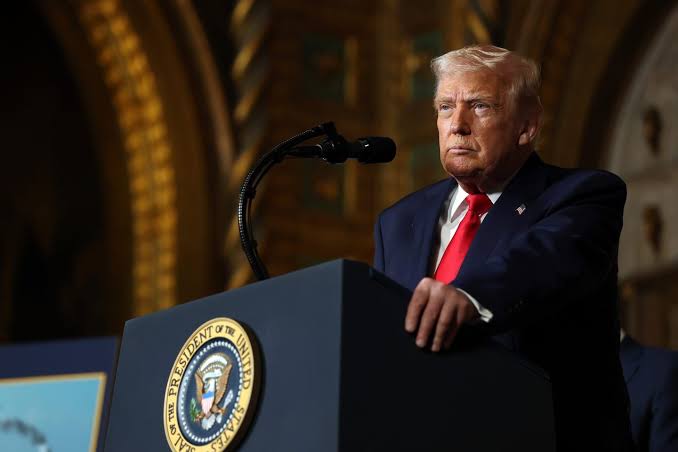
By 6:16, the Pentagon was silent in a way that frightened people more than alarms ever could.
General Marcus Hale stood alone in his office, the ruling open on his tablet. The language was cold, precise, and merciless. Criminal liability attaches to the initiation, planning, or execution of military force absent constitutional authorization. No hedging. No wiggle room. No patriotic poetry to soften the blow.
He thought of the briefing from three nights ago—the one that never went on record. Satellite maps of Greenland. Arctic shipping lanes. Rare earth deposits beneath the ice. And a voice on the secure line, familiar, impatient.
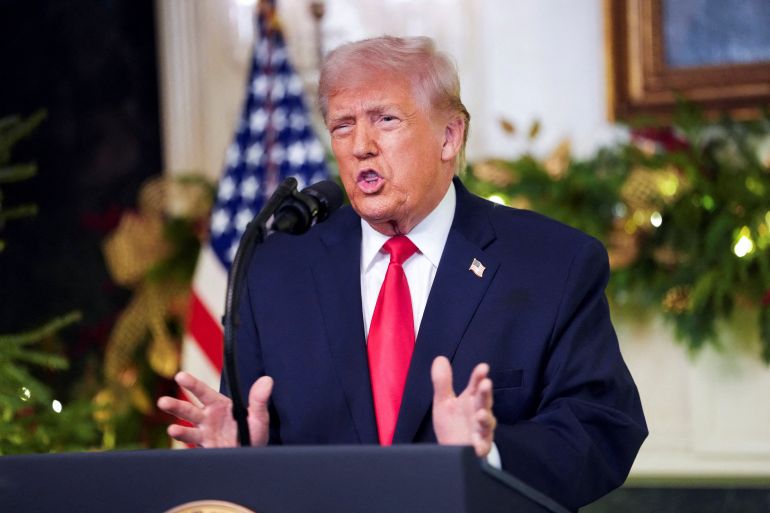
“History doesn’t wait for Congress, General.”
Now history had slammed the brakes.
Across the country, phones rang in barracks and command centers. Soldiers who had trained for years to obey without hesitation stared at the warning embedded in the ruling:
Following illegal orders is not a defense.
In Anchorage, Captain Elena Ruiz read it twice. She had grown up on stories of duty, of sacrifice, of following the chain of command no matter the cost. But this was different. This wasn’t a battlefield decision made in fog and fear. This was a line drawn in ink by nine justices who knew exactly what they were doing.
She whispered it aloud, tasting the words like ice water.
“They will be prosecuted.”
At the White House, the reaction was volcanic.
“This is judicial sabotage,” Donald Trump snapped, pacing beneath portraits of calmer men. “They think they can run the country from marble chairs?”
An aide shifted nervously. “Sir, the ruling is binding. The military’s already—”
“Then they’re weak,” Trump cut in. “Every great leader pushes past limits.”
But limits, it turned out, had teeth.
By noon, the Chairman of the Joint Chiefs issued a statement—carefully worded, legally vetted, unmistakable.
The United States Armed Forces will not engage in any operation against Greenland without explicit Congressional authorization.
It wasn’t defiance. It was survival.
On Capitol Hill, lawmakers who had dodged responsibility for years suddenly found it heavy in their hands. Cameras followed them as they debated sovereignty, alliances, and consequences. The Arctic had never felt closer—or colder.
In Nuuk, Greenland’s capital, Sermitsiaq published the headline in three languages. People gathered in cafés, fishermen paused at the docks, and elders nodded slowly. They had lived long enough to know that powerful nations often mistook quiet lands for empty ones.
That night, General Hale drafted a memo he never thought he’d write. Not about tactics. Not about readiness.
About restraint.
He ended it with a sentence that would echo through academies and courtrooms for decades:
The Constitution is not an obstacle to command. It is the command.
When the order finally came—Stand down—there was no applause. Only a collective exhale, long and uncertain.
Somewhere in the Arctic, the ice continued to crack and drift, indifferent to human ambition. But for the first time in a long while, the machinery of war had stopped not because it couldn’t move—
—but because it was told, clearly and finally, not to.


BREAKING: Checks and Balances Under Threat? Rep. Jasmine Crockett Warns Trump Poses a Serious Risk to America “This threatens national security,” Crockett says, accusing Trump of undermining U.S. democracy. Read her full statement and judge for yourself. See the Full details 👇👇

JUST IN: Supreme Court Issues Ruling Declaring Any Military Operation Against Greenland Without Explicit Congressional Authorization a Criminal Act, Warns Generals and Soldiers They Will Be Prosecuted for Following Illegal Donald Trump Orders

She Didn’t Hide It”: Taylor Swift Reportedly Cautious About Merging Finances Ahead of Wedding to Travis Kelce

BREAKING NEWS: Kansas City Chiefs star Patrick Mahomes shocks fans, donating his full $10 million prize money to a children’s hospital in his hometown of Tyler, Texas. The gift will power hope for children battling illnesses whose families cannot afford treatment. “I’ve watched too many families break because they can’t afford treatment for their children, and I vowed that if I ever had the chance, I would act”. Patrick said tearfully at a press conference. “These children have a future, and no child deserves to suffer like this.”

Travis Kelce supporters rally behind his charity mission as he claims a nationwide fan victory Kelce’s announcement that he captured the Nationwide Charity Challenge got revealed during his ‘New Heights’ podcast on Jan. 8

Travis Kelce’s Heart-Wrenching ESPN Revelation: “I Almost Retired at 33”

The Impact He’s Made on Our Families…” — Travis Kelce Left Emotional After Unexpected Messages From Operation Breakthrough Students

There’s Time…’ Andy Reid’s Three Words That Set Off Panic And Hope About Travis Kelce’s Future… Read more for updates👇

Kylie Jenner ‘dumped’ by Timothee Chalamet after two year relationship – ‘brutal way he humiliated her revealed’

A Secret Gift, One Hint, and a Big Reaction Travis Kelce Says Taylor Swift Gave Him His ‘Best Christmas Ever’. Check what the gift could be👇

REPORT: China Issues Stark Warning to Washington, Threatening Military Action and Sweeping Sanctions if Nicolás Maduro Is Not Released Following Donald Trump’s Capture of Venezuela’s President
